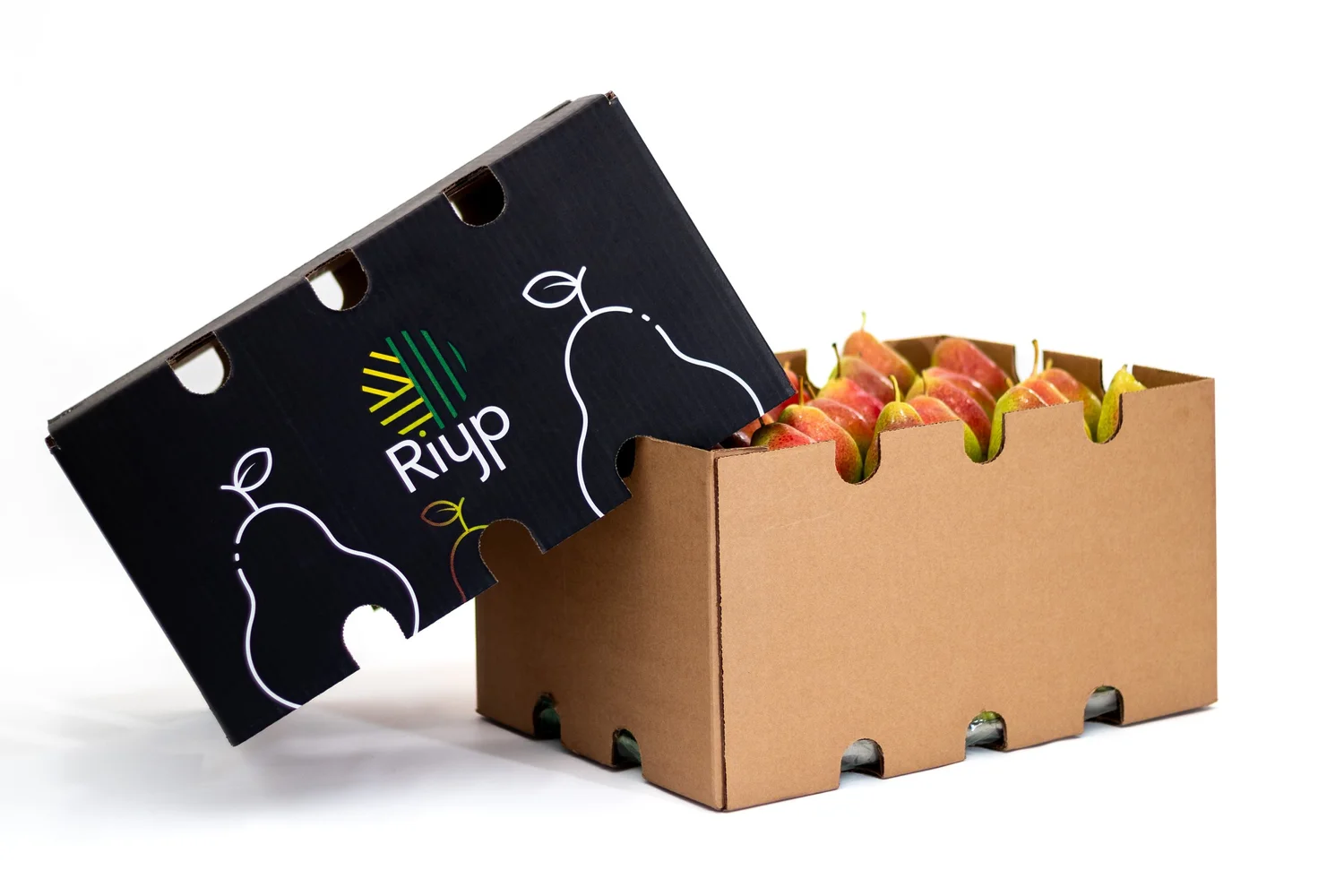
Riyp:
from website
to platform.
You have already
seen how we work.
We built the Essack Enterprise site — the holding company Riyp sits inside. Same brand family, same standard of craft, same team.
So this proposal skips the introductions. We already understand the group, the portfolio and the way you present it. What follows is what we found when we turned that same attention to Riyp.
essack.co
Four-page corporate site covering the enterprise, the founder and the full portfolio — Riyp, NUKE, Xpresso, PostNet and Tamr.
Riyp is an operating business
Essack Enterprise needed to be presented. Riyp needs to be run — it has buyers, seasons, enquiries and shipments. That needs software, not a brochure.
Riyp today.
What is genuinely working
- Clear, confident positioning — 40 countries, 5m+ cartons, ten years in.
- Three distinct export brands: Riyp, Bloo Moon and Cherry Pop.
- Real trust signals — FPEF membership, Forbes Africa, CNN, GQ.
- A published claim procedure. Very few competitors do this.
- The Harvests blog is already chasing the right search terms.
What is structurally missing
- Every visitor is anonymous. You never learn who was interested.
- Every enquiry is an email to info@riyp.co. No pipeline, no history.
- No data on which of the 40 markets or 7 categories drive demand.
- The two pages buyers want most — seasons and pack specs — are the thinnest.
- Squarespace caps it. No dashboards, no quoting, no country pages. Ever.
You export to forty countries
and the website cannot tell you
which one wants what.
Everything in this proposal follows from that single sentence.
What an import buyer
actually does.
A produce importer in Dubai or Kinshasa moves through six steps before money changes hands. The current site helps with two of them.
Discover
Searches "South African citrus exporter" or asks a trade contact.
Verify
Is this a real exporter? Certifications, memberships, press, history.
Check season
Is what I want available, and in which weeks?
Currently one static page and a "View Citrus" link.Check spec
Which variety, which counts, which pack, which carton?
Currently a paragraph of prose per category.Enquire
Send volume, destination port, incoterm, target window.
Currently a short form that becomes an email.Reorder
Come back next season, track the shipment, pull the documents.
Currently nothing at all.Three layers.
Storefront
A rebuilt riyp.co that answers the season question and the spec question before a buyer has to ask — and turns the enquiry into a structured request for quote instead of an email.
Engine
A CRM where every enquiry becomes a tracked record, a quote builder that issues branded proformas, a CMS you control, and a buyer list you can broadcast seasonal availability to.
Intelligence
Demand by country and by produce, conversion and time-to-quote, win/loss by market, and content attribution — so next season is planned on evidence instead of instinct.
The next three slides
are not mockups.
They are the real thing, running live inside this deck. Click them, filter them, fill them in. This is what we would ship.
The homepage
Live — interact with itTheir own brand, their own photography — rebuilt around the black export carton rather than stock fruit. The chip on the hero image is live: it reads the current week and names what is shipping right now.
The season calendar
Live — filter it49 varieties across the 52-week year. Filter by category, month or brand; click any bar for counts and pack specs. If a window has not opened, it captures the buyer's email and tells them the week it does — that is a lead with intent.
The quote request
Live — fill it inProduce, variety, volume, frequency, pack, destination port, incoterm, freight mode, window. The panel on the right builds the record as they type. What arrives is a qualified brief you can price — not "please send price list".
Every enquiry becomes a record.
Star Ruby · 2×40ft · CFR
Onions, potatoes · monthly
Packham's · weekly
Valencia · full season
Blueberries · 12×125g
Proforma sent · 3 days ago
Proforma opened 4×
Navels · 3×40ft · shipped
Quote builder
Turn a lead into a branded proforma PDF, sent and tracked from the platform. You see when it is opened.
Content, self-served
Harvests posts, the produce catalogue, the season calendar and country pages — all editable without a developer.
Availability broadcasts
One click: email every buyer who asked about Star Ruby that the window just opened. The highest-ROI channel you have.
Then it starts telling you things.
Demand by market and produce · enquiries
Enquiry → order funnel
Which content produced enquiries
Illustrative figures. But read the heatmap: the DRC wants vegetables and pome, the Netherlands wants berries, the Gulf wants citrus and subtropical. That is a sourcing plan you cannot buy anywhere else — and today it is invisible.
It compounds.
A brochure is worth the same on day 500 as on day one. This is not a brochure.
~90 new indexed pages
40 country pages plus ~49 variety pages, each targeting a real buyer search. Today riyp.co has 49 pages in total — this roughly triples the surface.
A buyer list you own
Every season alert and every RFQ adds a named buyer with a known interest. No platform can take that away or charge you for reach.
A demand record per season
Season two compares against season one. By season three you know what each market asks for before the harvest starts.
A buyer portal
Existing customers log in for live availability, shipment status, phyto certificates and invoices. Buyers do not leave a portal.
French and Arabic
Francophone Africa — DRC, Gabon, Cameroon, Chad — and the Gulf are already your markets. Almost no SA exporter serves them in their language.
It lifts the whole portfolio
Riyp is the proof. The same engine can carry NUKE, Xpresso and Tamr under Essack Enterprise once it is built once.
Four phases.
Each phase is independently valuable. You can stop after any one of them and still be ahead of where you are today.
Storefront
- Full site rebuild, new IA
- Interactive season calendar
- Structured produce catalogue
- 40 country landing pages
- RFQ flow + Harvests blog
Engine
- Secure team login
- CRM inbox & pipeline
- Full CMS control
- Email + WhatsApp alerts
Intelligence
- Demand & conversion dashboards
- Quote builder + proforma PDFs
- Content attribution
- Availability broadcasts
Portal & reach
- Buyer login portal
- Shipment & document access
- Operational KPI import
- French & Arabic
Where we would start.
We would begin with Phase 1 — the storefront — because it is the phase that starts generating the data every later phase depends on. The season calendar and the RFQ flow are already built; you have just used them.
Phases 2 and 3 are quoted separately so you can decide once you have seen Phase 1 live and watched the first enquiries land.
A 30-minute working session
We confirm the variety list and the real export windows with your technical team, agree the Phase 1 page list, and lock a start date.
Three things
Confirmed season windows and pack specs, access to your photography library, and one person on your side who can approve copy.